

 By syntheticplus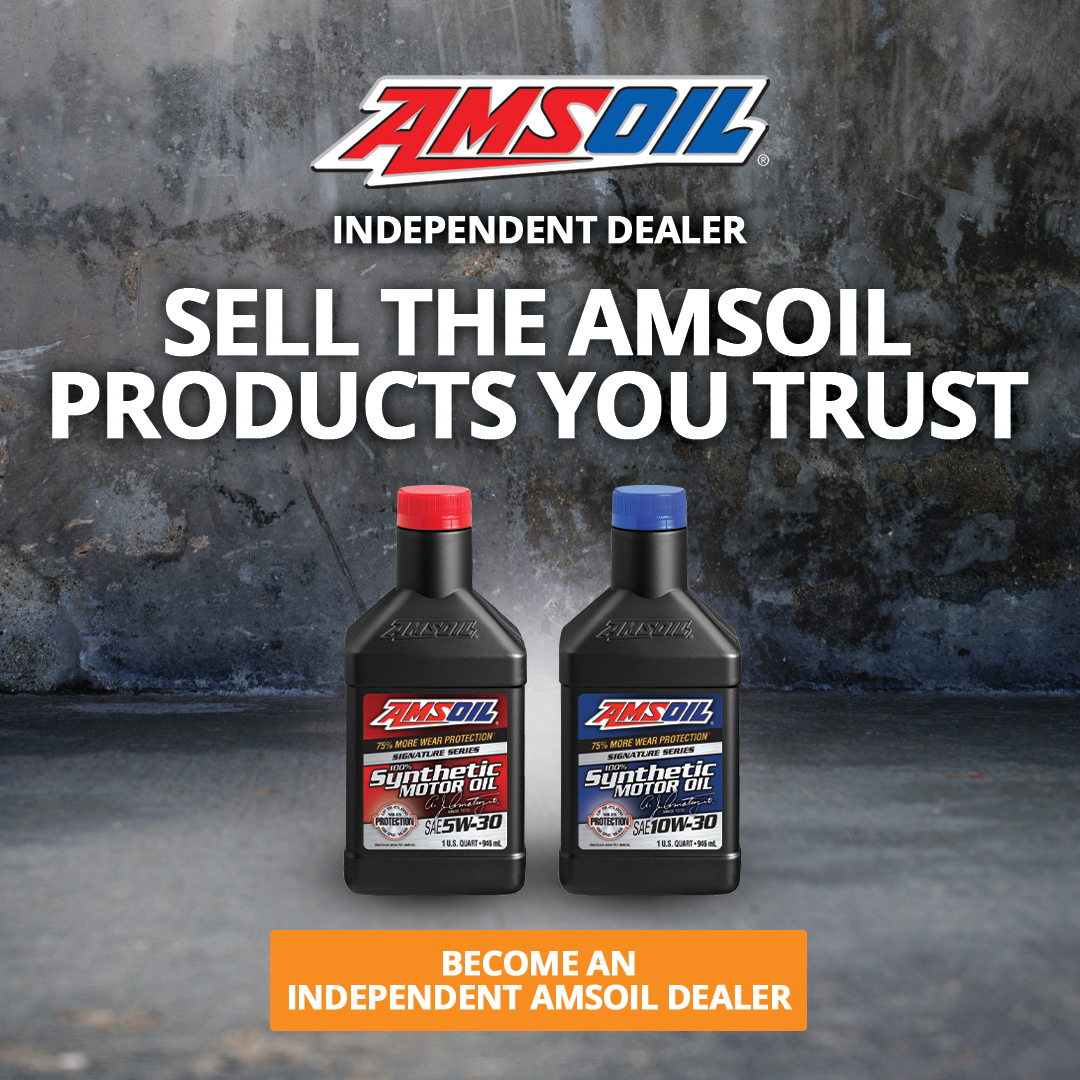
A Fleet Operator’s Honest Answer (With 438,000 Miles of Proof)
By an AMSOIL dealer and longtime user who’s seen the inside of engines that had no business still running
Let’s skip the marketing fluff.
You’ve probably heard AMSOIL dealers make big claims. Maybe you’ve rolled your eyes. Maybe your dealer told you to stick with their branded oil “for warranty protection.” Maybe you’ve looked at the per-quart price and decided it wasn’t worth the math.
I get it. I was skeptical too — until I watched a gas engine and transmission hit 438,000 miles with the health of something half its age. That changed how I think about oil, and it should change how you think about your fleet’s operating costs.
Here’s the straight answer, backed by real data.
The Case Study That Ended the Debate for Me
I run AMSOIL across mixed commercial vehicle fleets. I’ve seen what conventional oil does to high-mileage working engines, and I’ve seen what extended-interval synthetic does differently.
The number that sticks with me: 438,000 miles. One engine. One transmission. Still running.
Here’s how we got there:
- Engine oil changes every 25,000 miles — not 3,000, not 5,000. Twenty-five thousand.
- Transmission fluid changes every 100,000 miles — on a fluid most fleets swap out at 30,000–50,000 out of anxiety alone.
Oil analysis at multiple intervals showed wear metals well within acceptable limits. No sludge. No bearing wear that would make a shop tech blink. An engine that by conventional-oil logic should have been rebuilt or replaced twice over — intact, operational, and still pulling its weight.
That’s not luck. That’s chemistry doing what it was engineered to do.
“But AMSOIL Costs More”
Yes. Upfront, it does. Roughly 2x the cost per quart compared to conventional or OEM-branded oil.
Here’s where fleet operators lose the plot on cost analysis: they’re comparing the price of the oil and ignoring the price of everything else.
Let’s do the real math on a single commercial vehicle:
Conventional oil at 5,000-mile intervals (50,000 miles/year):
- 10 oil changes per year
- Labor, filter, downtime, disposal fees — conservatively $80–$150 per service
- Total: $800–$1,500/year per vehicle just in service costs
AMSOIL at 25,000-mile intervals:
- 2 oil changes per year
- Same labor cost per service
- Total: $160–$300/year per vehicle in service costs
The oil itself costs more. The program costs dramatically less. On a fleet of 10 vehicles, you’re looking at potential savings of $6,400–$12,000 per year — just in oil change labor and downtime — before you even account for extended engine life and reduced repair frequency.
And that 438,000-mile engine? It never needed a rebuild. What does a commercial engine rebuild cost? What does replacing a vehicle cost? Run that number against a few extra dollars per quart and tell me AMSOIL is expensive.
“My Dealer Says I Have to Use Their Branded Oil”
This is the one that genuinely makes me want to flip a table.
It’s either misinformation or a sales tactic. Here’s the truth:
The Magnuson-Moss Warranty Act (15 U.S.C. § 2302) is federal law. It explicitly prohibits manufacturers and dealers from voiding your warranty simply because you used a non-OEM product — unless they can prove that product caused the specific failure. They can’t void your warranty because you didn’t buy their branded oil. Full stop.
But let’s go further. AMSOIL doesn’t just meet OEM specifications — it meets or exceeds them. We’re talking full API certification, ILSAC compliance, GM dexos approval where applicable, and compatibility with every major OEM spec on the market. AMSOIL also backs this up with its own product warranty, which is something your dealer-branded oil almost certainly doesn’t offer.
So when a dealer tells you that you must use their oil to maintain your warranty, ask them to put that in writing. Watch how fast the conversation changes.
What the Independent Data Shows
AMSOIL publishes third-party tested performance data — not internal marketing claims, actual independent lab results. Key findings relevant to fleet operators:
- Wear protection: AMSOIL Signature Series showed up to 75% more engine protection against wear versus the industry standard in independent testing (based on the ASTM sequence IVB wear test).
- Extreme temperature performance: Full fluidity at temperatures where conventional oils thicken to molasses — critical for cold-start wear, which accounts for a disproportionate share of total engine wear over a vehicle’s lifetime.
- Oxidation resistance: Resists breakdown far longer than conventional oils, which is exactly what makes extended drain intervals scientifically legitimate — not just a sales pitch.
- Turbo protection: In high-heat turbocharger environments where conventional oil deposits coking residue, AMSOIL’s additive package keeps surfaces clean.
This isn’t “our oil is great because we say so.” This is third-party tested, publicly available data you can read yourself.
Who Should Be Running AMSOIL (And Who Might Not Need It)
I’ll be straight with you: if you have a personal vehicle you put 8,000 miles a year on and change your oil religiously, AMSOIL’s extended interval advantage is less dramatic for you.
But if you operate a commercial fleet — vehicles that work hard, accumulate miles fast, and where downtime is money — the calculus is completely different.
AMSOIL is the right call for:
- High-mileage commercial fleets where every oil change means a vehicle off the road
- Hard-working diesel or gas engines under constant load (towing, hauling, delivery routes)
- Operations in extreme climates — brutal Texas summers, hard northern winters
- Operators who want to extend equipment life instead of replacing it on schedule
- Anyone tired of their maintenance program running them instead of the other way around
The Bottom Line
Is AMSOIL really better?
After years as a dealer, after running it through mixed commercial fleets, after watching one engine and transmission quietly roll past 438,000 miles on 25,000-mile oil change intervals — yes. Demonstrably, measurably, documentably better for the applications that matter most.
The price objection is a math problem, and the math isn’t close once you run it honestly. The warranty objection is a myth, and now you know the law that makes it a myth. The performance data is independent and available.
What’s left is just deciding whether you want to keep doing what you’ve always done, or whether you want to run a smarter, leaner maintenance program.
Ready to Stop Overpaying for Oil Changes?
If you’re managing a commercial fleet and want to know exactly what an AMSOIL program would look like for your specific vehicles — intervals, products, cost comparison — let’s talk.
Become a Preferred Customer or Dealer and get access to wholesale pricing, the full product line, and a maintenance program built around your operation — not a quick-lube schedule designed for someone else’s car.
[Get Wholesale Pricing — Become a Preferred Customer Today →]
Have questions about whether AMSOIL is right for your fleet? Reach out directly. I’ll run the numbers with you.
Ready to Buy AMSOIL for your business fleet?
Disclaimer: Results referenced are based on personal fleet experience and AMSOIL’s published independent test data. Individual results vary by application, driving conditions, and maintenance practices. AMSOIL product warranties are subject to their published terms and conditions.